


By Sarah R. Haines, MSW, MBA
Vice President, PACE Market Lead, AnewHealth
This summer, AnewHealth brought together PACE executives, clinical leaders, and members of our pharmacy team for the 2026 Impact & Innovation Summit in Philadelphia. The Summit convened leaders for candid, practical discussion about the evolving PACE landscape and the actions needed to support continued success.
Throughout the event, participants shared perspectives on rising participant complexity, regulatory expectations, workforce pressures, clinical innovation, pharmacy operations, technology, and the financial realities of a fully risk-bearing model. While every PACE organization brings its own priorities and operating realities, three themes surfaced consistently. Together, they describe what a PACE organization should be able to expect from its pharmacy partner: trust, reliability, and deep clinical expertise.
1 PACE-Specific Pharmacy Expertise Must Remain Foundational to Partnership
One message came through clearly: PACE cannot be approached as simply another healthcare setting. It is a distinct model with its own workflows, responsibilities, culture, and measures of success. Leaders emphasized the importance of working with partners that understand how clinical, operational, financial, and regulatory decisions intersect across the model.
That understanding is especially important in pharmacy. A single medication decision may affect a participant’s cognition, mobility, appetite, fall risk, caregiver support, utilization, cost, and quality of life. PACE-specific experience should therefore be more than a credential. It should shape how a PACE pharmacy partner communicates, prioritizes recommendations, supports the interdisciplinary team, and responds to the realities of participant care.
Why dependable execution reinforces PACE expertise
Expertise must also be reinforced by dependable execution. Timely medication delivery, accurate medication reconciliation, transitions of care support, clear documentation, regulatory readiness, and consistent communication are not simply operational responsibilities. They directly affect participant safety and the care team’s ability to remain proactive.
For AnewHealth, this understanding has developed through more than 15 years of partnership with PACE organizations. It continues to evolve through ongoing dialogue with leaders, clinicians, and care teams, including the conversations that shaped our time together at the Summit.
2 Medication-Related Risk in PACE Must Be Identified Earlier
A second theme was the need to continue moving toward a more proactive model of care. PACE participants often manage complex medication regimens across multiple conditions, prescribers, and care transitions. That complexity makes it increasingly important to identify medication-related risk before it contributes to functional decline, an adverse event, or avoidable utilization.
Why single-drug alerts miss combined regimen risk
Traditional medication review methods and commercially available alert systems may identify individual drug concerns, but they do not always reveal how an entire regimen is affecting the participant. Risk can emerge from the combined effects of several therapies, including their cumulative anticholinergic and sedative burden and their influence on cognition, cardiac function, falls, and functional status.
How MedWise technology evaluates combined medication effects
AnewHealth’s proprietary MedWise® technology is designed to evaluate those combined effects and help clinicians identify concerns that may not be apparent when medications are assessed individually. These insights can support practical interventions such as deprescribing, dose adjustment, therapeutic substitution, enhanced monitoring, and follow-up with the care team.
The Summit gave PACE leaders an opportunity to explore this approach firsthand and consider how more advanced medication intelligence can support the realities of caring for a clinically complex population of older adults. For Val Sheehan, MPH, Chief Executive Officer of CalPACE, the experience underscored both the breadth of medication management in PACE and the potential for deeper clinical insight:
“What I now appreciate even more after spending time at the AnewHealth Impact & Innovation Summit is just how complex medication management is for this population, and how effectively managing accessibility, adherence, reconciliation, and safety makes such a vital difference for PACE participants every day,” said Sheehan. “I was fascinated to learn about pharmacogenomics and how our genetics can affect drug interactions, metabolism, and ultimately the efficacy of the medications we take. So next level!”
That perspective speaks to the larger opportunity before us. The objective is not simply to generate more alerts or introduce more data into already complex clinical workflows. It is to distinguish meaningful risk from noise and provide non-directive decision support that helps clinicians determine the most appropriate next action for each participant. Technology should not replace clinical judgment. It should strengthen it by giving experienced clinicians greater visibility and helping the care team intervene earlier.
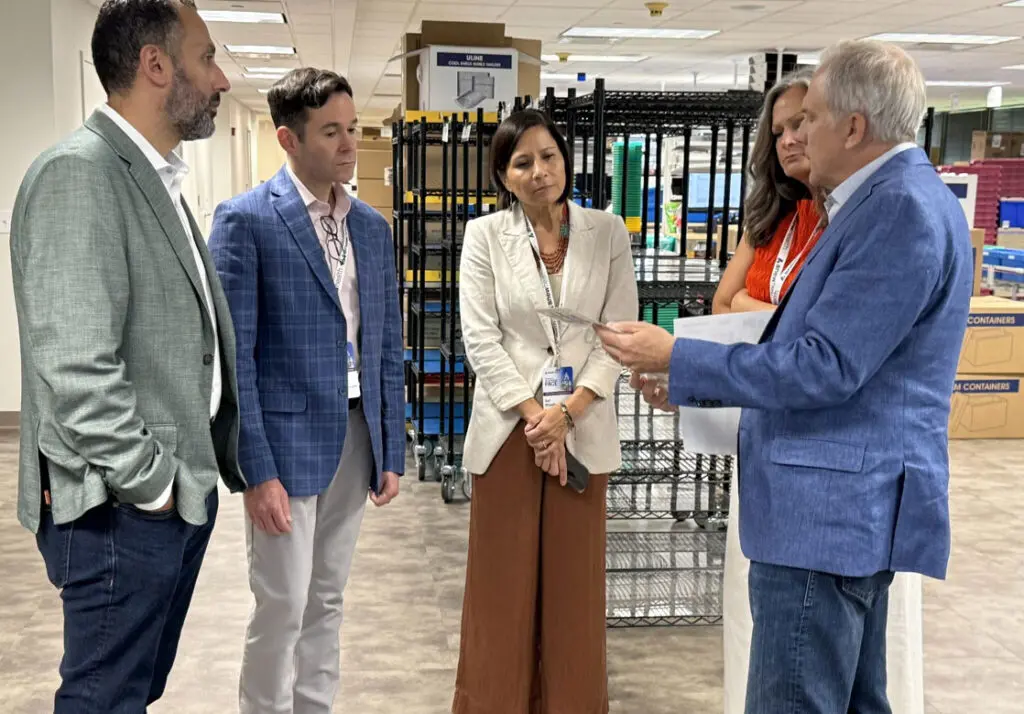
Impact & Innovation Summit attendees tour the AnewHealth PACE Pharmacy
3 Pharmacy Must Move Closer to the PACE Interdisciplinary Team
Across the Summit, leaders reinforced that pharmacy creates the greatest value when it is integrated into the care model rather than operating alongside it. The opportunity is to move beyond a transactional relationship in which pharmacy simply receives prescriptions, dispenses medications, and communicates primarily when an issue occurs.
Instead, PACE pharmacists should work alongside primary care providers, nurses, medical directors, behavioral health professionals, caregivers, and operational leaders. By bringing relevant medication insight into the discussions and workflows where decisions are made, the pharmacist helps the interdisciplinary team consider the full clinical and practical implications of a participant’s regimen.
That integration is particularly important in complex areas such as substance use disorders in older adults, polypharmacy, transitions of care, and the expanding use of GLP-1 therapies. These decisions may involve safety, dependence, nutritional risk, tolerability, medication burden, cost, and goals of care. Pharmacy can help the team navigate those considerations by contributing the right expertise to a broader, participant-centered conversation.
The value-based impact of integrated clinical pharmacy
When pharmacy is integrated effectively, it also becomes a stronger contributor to value-based outcomes. Earlier risk identification and coordinated medication management can support safer care, reduce avoidable utilization, strengthen compliance, and protect program sustainability.
Across AnewHealth-supported PACE programs, integrated clinical pharmacy services have been associated with:
- More than 10% reductions in emergency department visits and hospitalizations
- A 24% reduction in mortality
- Approximately $5,024 in total healthcare cost savings per participant
Moving Forward Together: What PACE Organizations Should Expect From a Pharmacy Partner
The Impact & Innovation Summit demonstrated the value of bringing PACE leaders and pharmacy experts together to speak openly about what is changing and how we can collectively prepare for what comes next.
Pharmacy has an important role to play in that future. Its contribution will be defined not by dispensing alone, but by deep PACE expertise, earlier identification of medication-related risk, and meaningful integration with the interdisciplinary team. Together, those capabilities allow pharmacy to become more than a service. They make it a trusted clinical and operational partner in PACE success. If your organization is evaluating its options, our PACE team is glad to talk through what that partnership looks like in practice.
Connect With AnewHealth at the 2026 National PACE Association Annual Conference
We look forward to continuing these discussions with PACE leaders at our next Impact & Innovation Summit, taking place November 10 to 12 in Huntington Beach, California.
We also can’t wait to connect with our PACE partners at the 2026 National PACE Association Annual Conference, held October 11 to 14 at the Sheraton Denver Downtown in Denver, Colorado.
Frequently Asked Questions About PACE Pharmacy Partnership
What should a PACE organization expect from a pharmacy partner?
A PACE pharmacy partner should bring PACE-specific clinical expertise, dependable operational execution, and active participation in the interdisciplinary team. In practice that means timely medication delivery, accurate medication reconciliation, transitions of care support, regulatory readiness, and proactive identification of medication-related risk before it affects a participant.
How is PACE pharmacy different from long-term care pharmacy?
Long-term care pharmacy generally serves facility-based residents under a fee-for-service arrangement. PACE pharmacy supports a fully capitated, risk-bearing model in which the organization is accountable for the whole of a participant’s care. That changes how medication decisions are weighed, because cost, utilization, function, and quality of life are managed together rather than separately.
How does medication risk identification work in a PACE setting?
Beyond single-drug interaction checks, medication risk identification in PACE evaluates how an entire regimen affects a participant, including cumulative anticholinergic and sedative burden and effects on cognition, falls, and functional status. AnewHealth’s MedWise technology supports that analysis so the interdisciplinary team can act earlier through deprescribing, dose adjustment, or enhanced monitoring. Our clinicians have written more about making the most of PACE pharmacy.