Flu season can change more than just daily routines. Illness, severe weather, and reduced caregiver availability can make it harder for people to take medications as prescribed. Healthcare professionals can help reduce these risks by identifying potential barriers early because missed doses, delayed refills, medication confusion, and caregiver disruptions can all increase the risk of adverse health outcomes.
The good news? Many of these challenges can be prevented with proactive planning and communication.
Whether you’re supporting people in their homes, coordinating care, managing medications, providing direct support services, or working within a PACE program, use the recommendations below during routine conversations with those in your care and the people who support them.
Why Flu Season Can Affect Medication Adherence
When people become sick, their regular schedules often change. They may spend more time resting, sleep through timing of medication administration, eat less, miss appointments, or focus primarily on managing flu symptoms.
For people living with chronic conditions, complex medication regimens, intellectual and developmental disabilities (IDD), or multiple health conditions, these disruptions can increase the risk of medication non-adherence and lead to worsening health outcomes.
Common challenges during flu season include:
- Forgetting refills
- Adding new short-term medications
- Changes in caregiver availability
- Missing routine medication doses
- Running low on medications
- Confusion about medication schedules
- Transportation or access barriers
A brief medication check-in can uncover these risks before they lead to an interruption in care.
Refill Gaps Become More Common During Flu Season
Illness, severe weather, holidays, and transportation problems can make prescriptions harder to obtain. Encourage people and caregivers to review medication supplies before they are close to running out and to confirm how weekends or holiday hours may affect access to care teams and medications.
Questions to Ask:
- How many doses are left?
- Does the medication have refills left?
- When is the next refill due?
- Does the pharmacy offer delivery, mail order, or refill reminders?
- Have there been changes to insurance?
- What is the plan for delays due to severe weather, travel or unexpected caregiver absence?
A simple refill reminder can help prevent interruptions in treatment and avoid unnecessary health complications.
New Medications Can Increase Complexity
To manage flu symptoms, new prescriptions or the use of an over-the-counter (OTC) products may be needed. Adding an antiviral, antibiotic, cough medicine, decongestant, pain reliever, or combination product can make an existing regimen more complicated. Some products may duplicate ingredients, interact with current medications, or be inappropriate for certain health conditions.
While these therapies may be necessary, they can create confusion for people who are already managing multiple medications. Encourage the individual or caregiver to ask a pharmacist or prescriber:
- What is this medication intended to treat?
- What dose should be taken, when should it be taken, and for how long?
- Should all routine medications continue?
- Could this product duplicate an ingredient in another medication?
- What side effects or interactions require attention?
- When should the care team be contacted?
People should not stop, start, or change a prescribed medication without guidance from the appropriate clinician or pharmacist. Clear communication can help improve medication safety and reduce confusion.
Health Literacy Matters During Flu Season
Seasonal illnesses often come with new healthcare information, medication instructions, and treatment plans.
For patients and caregivers with limited health literacy, language barriers, cognitive challenges, or complex healthcare needs, this information can quickly become overwhelming.
Health care teams can help by:
- Using plain language
- Providing written medication instructions
- Including caregivers in discussions
- Using teach-back methods to confirm understanding
- Offering visual reminders when appropriate
- Using approved translation services
Clear communication helps improve confidence, understanding, and medication adherence.
How Healthcare Teams Can Help Prevent Medication Gaps
Healthcare organizations across the continuum can play a role in keeping individuals safe during flu season.
Best Practices Include:
✅ Encouraging early prescription refills
✅ Conducting routine medication reviews
✅ Identifying adherence concerns early
✅ Educating individuals and caregivers about medication changes
✅ Supporting caregivers with clear instructions and resources
✅ Coordinating across care teams when concerns arise
✅ Addressing barriers related to transportation, access, and health literacy
✅ Leveraging interdisciplinary care teams to identify and address medication-related challenges early
Small interventions today can help prevent larger health issues tomorrow.
Practical Tips for Caregivers During Flu Season
Many older adults, individuals with disabilities, and those living with complex health conditions rely on family members, direct support professionals (DSPs), home health aides, PACE interdisciplinary care teams, or other caregivers to help manage medications. Flu season can affect both the person receiving care and the person who normally provides that support.
Whether you’re caring for a parent, spouse, child, or individual receiving support services, a little preparation can go a long way.
Build a Backup Plan
Ask who normally manages or assists with medications and what will happen if that person becomes ill or unavailable. A back up caregiver or staff member should know:
- The current medication list and administration schedule
- Where medications and related supplies are stored
- How refills are requested and obtained
- Which pharmacy and healthcare contacts to use
- What changes or warning signs should be reported
- Is there a backup caregiver available
Having answers to these questions before problems arise can help maintain continuity of care.
Keep an Updated Medication List
If a visit to the emergency room, urgent care, or hospital becomes necessary, having an up-to-date medication list can improve care coordination and medication safety.
Include:
- Medication names
- Dosages
- Administration times
- Prescribing providers
- Allergies and history of adverse drug reactions
- Vitamins and supplements
- OTC medications
Review the list regularly and update it whenever medications change.
Watch for Changes in Routine
When someone is sick, daily habits often change. Sleeping longer, staying in bed, eating less, or feeling fatigued can increase the likelihood of missed medication doses.
Helpful strategies include:
- Using medication reminders or phone alarms
- Posting medication schedules in visible locations, if they have multiple people helping them
- Linking medication administration to consistent daily activities
Maintaining as much routine as possible helps support adherence.
Ask Questions About New Medications
Whenever a healthcare provider recommends a new medication, caregivers should feel comfortable asking questions.
Consider asking:
- Are there any medication interactions?
- Should all current medications be continued?
- What side effects should be monitored?
- When should the new medication be taken?
- How long should the new medication be taken?
- When should we contact a healthcare provider?
Understanding the answers can reduce confusion and support better outcomes.
Don’t Forget About Your Health
Caregivers are essential to maintaining continuity of care, but many prioritize others’ health over their own. During flu season, staying healthy yourself helps ensure you can continue supporting those who depend on you.
Remember to:
- Stay current on recommended vaccinations
- Practice good hand hygiene and wear personal protective gear (gloves and masks), if needed
- Get adequate rest
- Stay hydrated
- Ask for help when needed
- Take your own medications as prescribed
Caregiver health is an important part of patient health.
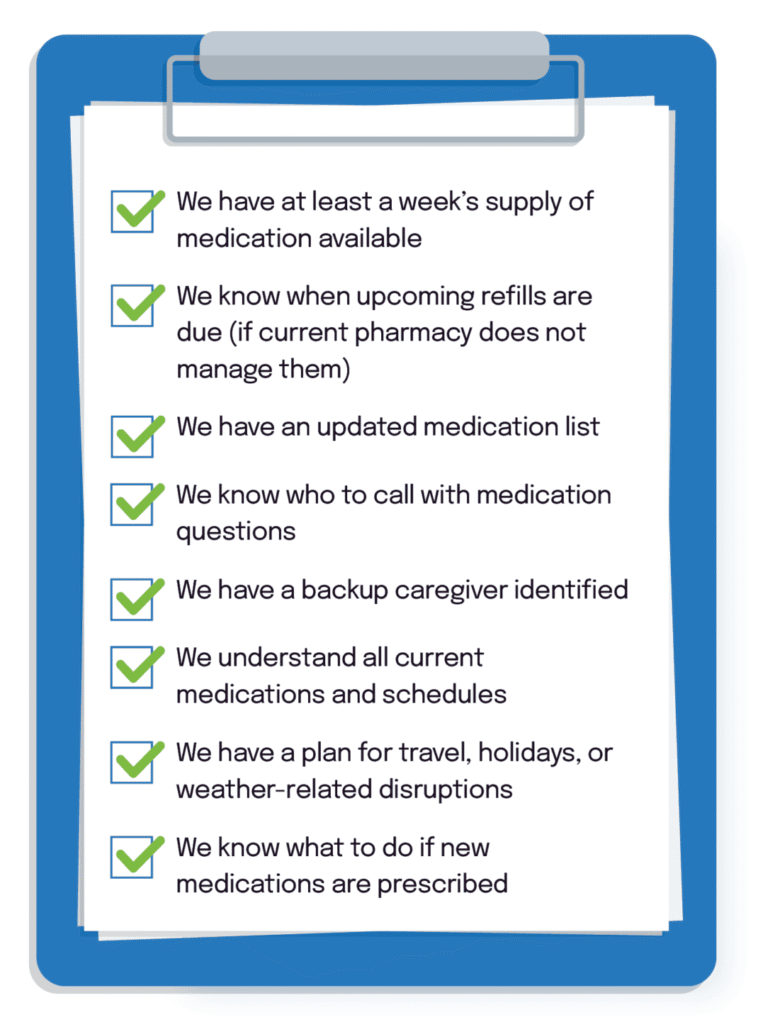
Caregiver Flu Season Checklist
Before flu season arrives, make sure you can answer “yes” to the following:
Key Takeaway
Flu season doesn’t just affect physical health. It can disrupt medication routines, create access challenges, increase caregiver burden, and contribute to gaps in care.
Planning ahead, monitoring for adherence risks, supporting caregivers, and maintaining clear communication can help healthcare teams and families keep individuals on track with their medications throughout the season.
For organizations supporting people with complex medication needs, these efforts are easier to manage with the right pharmacy partner. A comprehensive pharmacy partner like AnewHealth can help connect the pieces — from medication synchronization and adherence support to refill coordination, caregiver education, packaging solutions, and pharmacy insights.
With the right support in place, organizations can reduce medication-related disruptions, improve continuity of care, and help people stay healthier during flu season and beyond.