

By Brenna C. Murphy, PharmD, BCGP
National Account Executive, AnewHealth
Medication lists have a way of growing over time, especially for Program of All-inclusive Care for the Elderly (PACE) participants.
A medication list starts at home and increases after a primary care change. A hospital stay adds another drug, and multiple specialists prescribe more. Some even treat side effects of others. Before long, a participant may be taking medications that were appropriate years ago but deserve a second look today.
That’s one reason medication optimization has become an increasing priority for PACE organizations. But despite the growing focus on the topic, there’s still some misunderstanding about what it involves.
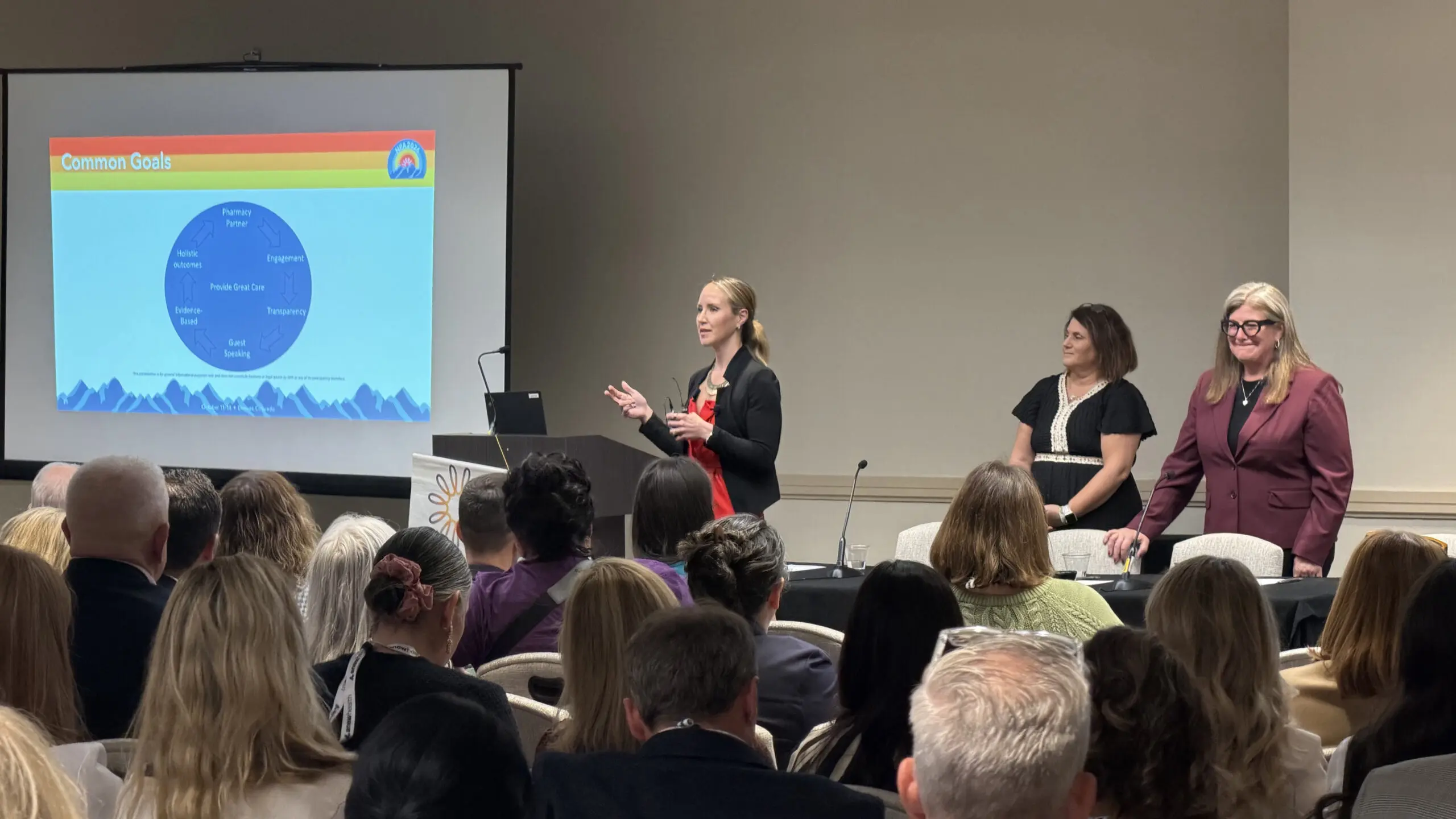
During a recent educational session at the National PACE Association (NPA) Annual Conference, Lisa Rosenberg (Banks), PharmD, BCGP, Clinical Initiatives Manager, and I joined Christina Wagener, DNP, MBA, Chief Clinical Officer of BoldAge PACE, to share insights from a medication optimization initiative between AnewHealth and BoldAge PACE. As part of the initiative, Lisa reviewed participant regimens to identify risks and gaps in care, while I partnered with BoldAge PACE leaders to set priorities, track trends and educate prescribers.
What we learned challenged several common assumptions about medication optimization. As you consider opportunities to strengthen medication management for PACE participants, keep these myths in mind.
Myth #1: Medication Optimization Means Reducing Medications
In some cases, deprescribing is the right step. But medication optimization doesn’t always lead to fewer medications. Reviews can result in a wide range of recommendations, from discontinuing unnecessary therapies to adjusting doses, switching to safer alternatives or addressing gaps in treatment.
During one medication review for BoldAge PACE, Lisa identified a participant whose age, dual antiplatelet therapy and corticosteroid use placed them at higher risk for gastrointestinal (GI) bleeding. After reviewing the regimen with the care team, she recommended adding a proton pump inhibitor for GI protection. In another review, Lisa discovered that a participant with COPD did not have a rescue inhaler available for acute symptoms. Based on that finding, BoldAge PACE added a short-acting bronchodilator to the participant’s medication regimen to support symptom management, reduce exacerbation risk and help prevent avoidable emergency department visits.
Sometimes optimization means discontinuing a medication. Other times, it means initiating one. Either way, the focus is making sure every medication serves a purpose and supports the participant’s overall care plan.¹˒²
Myth #2: Medication Count Tells the Whole Story
Two PACE participants can take the same number of medications and have very different risk profiles. One may have a well-managed regimen for multiple chronic conditions. Another may be taking medications that overlap, interact, increase fall risk or contribute to cognitive impairment and other adverse effects.¹˒³
The medication list may look similar on paper, but the risks and opportunities for intervention can be very different.
This was evident in our findings with BoldAge PACE. Across medication reviews, Lisa identified opportunities to address therapeutic duplication, high-risk medication combinations, drug interactions and gaps in treatment. Many of those concerns had little to do with the number of medications a participant was taking and far more to do with how well the regimen supported the participant’s current needs.
Looking beyond medication count allows care teams to focus on what matters most: why each medication was prescribed, how they interact with one another and whether they continue to provide meaningful benefit.
Myth #3: Medication Optimization Is Just a Cost-Saving Initiative
PACE leaders are expected to balance financial stewardship with high-quality participant care, so it’s not surprising that medication optimization is sometimes viewed through a financial lens.
Our collaboration with BoldAge PACE demonstrated that medication optimization can deliver both financial and clinical value. While the PACE organization realized reductions in medication spend across several sites, the benefits extended beyond cost savings. Across more than 400 completed reviews, Lisa identified opportunities to mitigate medication-related risk, address prescribing appropriateness and strengthen medication regimens. Participants experienced an average 7-point reduction in medication-related risk and an average reduction of 4.2 medications per review.
Cost savings may be one outcome of medication optimization, but its greatest value lies in helping care teams identify opportunities to reduce risk, mitigate the likelihood of hospitalizations and improve participant care.²˒³
Myth #4: Caregivers Always Resist Medication Changes
Medication changes often raise questions from family members and caregivers, especially when a participant has been taking the same therapy for years. Why revisit it now? What happens next? How will we know if the change is helping?
Those questions don’t necessarily signal resistance. Research suggests caregivers are often more comfortable supporting a recommendation when they understand the rationale behind it, the potential benefits and risks, and what to expect after the change is made.4˒5
Throughout our initiative, the AnewHealth team closely collaborated with BoldAge PACE to evaluate medications in the context of participants’ current health status, risks and treatment goals. As the care team at BoldAge PACE discussed recommendations with caregivers, they could provide important context around concerns such as fall risk, side effects, quality of life and whether a medication was still providing meaningful benefit.
Providing that context can make a real difference. Understanding the rationale behind a recommendation helps caregivers weigh the potential benefits and risks and engage more confidently in decisions about a loved one’s care.⁶˒⁷
Myth #5: Medication Optimization Starts and Stops with Pharmacy
Pharmacists play an important role in medication optimization, but the work is most effective when it draws on perspectives from across the care team.
At AnewHealth, our clinical pharmacists partner with prescribers, clinical leadership and interdisciplinary teams (IDTs) to evaluate participant medication regimens and identify opportunities to address medication-related risks, prescribing appropriateness, over-treatment, and gaps in care. We saw the impact of this team-based approach through our clinical initiative with BoldAge PACE.
Collaboration is especially important in PACE, where participants often receive care from multiple providers and specialists. Understanding how medications fit into a participant’s broader care plan requires input from every discipline involved in their care.⁸
Let’s Connect
Medication regimens change over time, and the needs of PACE participants change with them. As discussed during our session with BoldAge PACE at NPA, ongoing medication reviews can help identify opportunities to reduce risk and support more informed treatment decisions.
Ready to explore what medication optimization could look like in your PACE program? Connect with the AnewHealth team to learn how comprehensive medication reviews and clinical support services can support your participant, care team and organizational goals.
References
- Hung A, Kim YH, Pavon JM. Deprescribing in Older Adults with Polypharmacy. BMJ. 2024.
- Quek A, et al. The Effect of Deprescribing Interventions on Mortality and Health Outcomes in Older People: A Systematic Review and Meta-analysis.
- Linsky AM, Motala A, Lawson E, Shekelle P. Deprescribing to Reduce Medication Harms in Older Adults. Agency for Healthcare Research and Quality (AHRQ).
- Pickering AN, et al. Older Patient and Caregiver Perspectives on Medication Value and Deprescribing: A Qualitative Study. Journal of the American Geriatrics Society. 2020. [pmc.ncbi.nlm.nih.gov]
- Reeve E, Low LF, Hilmer SN. Beliefs and Attitudes of Older Adults and Carers About Deprescribing of Medications: A Qualitative Focus Group Study. British Journal of General Practice. 2016.
- Mate KS, et al. Evidence for the 4Ms: Interactions and Outcomes Across the Care Continuum.
- Tinetti ME, Naik AD, Dodson JA. Moving From Disease-Centered to Patient Goals-Directed Care for Patients With Multiple Chronic Conditions. JAMA Cardiology.
- Interventions to Optimize Medication Management in Older Adults: An Umbrella Review of Systematic Reviews.