


By Brenna C. Murphy, PharmD, BCGP
National Account Executive, AnewHealth
PACE is built on interdisciplinary care. Yet pharmacy can still be treated as a service that operates alongside the care team rather than as an active part of care planning.
That is a missed opportunity.
For participants managing multiple chronic conditions and complex medication regimens, one medication decision may affect cognition, mobility, fall risk, caregiver burden, utilization, cost, and quality of life. Successful PACE organizations engage pharmacists not only to review medications, but to strengthen the PACE interdisciplinary team (IDT) and its ability to identify risk, coordinate care, and make more informed decisions for each participant.
When pharmacists are consistently involved, they also strengthen communication, continuity of care, and ongoing education across the team.
As one PACE physician described it:
“Having a pharmacist be part of the IDT committee, the polypharmacy phone calls, and the falls committee is essential for communication and continuity of care. It is also continuing education for the team.” — Physician, AnewHealth-supported PACE program
That integration is especially valuable in five areas where pharmacist expertise can strengthen care planning and support the interdisciplinary team.
1. Helping the PACE Interdisciplinary Team Prioritize Polypharmacy Risk
Medication count can signal complexity, but it does not reveal which participants are most likely to experience adverse effects, treatment failure, or cumulative regimen risk.
Pharmacists can help the IDT identify participants who warrant closer review based on factors such as significant polypharmacy, recurrent falls, recent hospitalizations, changes in cognition or function, multiple prescribers, or unexpected medication response.
This work requires more than a general medication review. Pharmacists with expertise in geriatrics and complex care can help the team understand how age, frailty, comorbidities, and the complete regimen interact for the individual participant.
That prioritization allows the IDT to focus its attention where intervention may have the greatest value, including dose adjustment, therapeutic substitution, enhanced monitoring, or deprescribing.
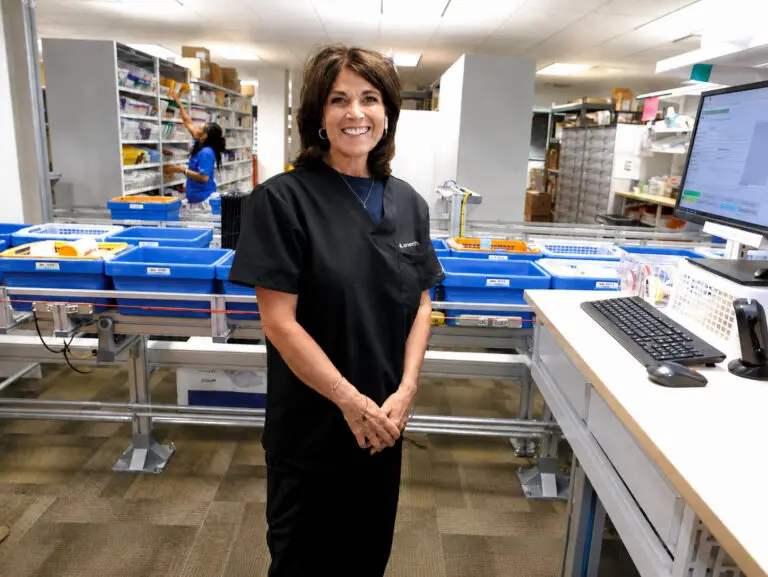
Integrated pharmacist expertise helps bring medication risk into the broader care conversation.
2. Bringing Medication Expertise into Falls Prevention for Older Adults
Falls are rarely caused by one factor. Mobility, vision, cognition, blood pressure, environment, and medications may all contribute.
A pharmacist can strengthen the work of a falls committee by reviewing the participant’s complete regimen for cumulative sedative and anticholinergic burden, orthostasis, hypoglycemia risk, duplicate therapies, recent medication changes, and drug interactions.
The value is not simply identifying a medication associated with falls. It is helping the committee determine whether a practical intervention is available and how that recommendation fits within the participant’s broader care plan.
Pharmacist participation also creates an ongoing learning opportunity for the team. By explaining how medications may affect sedation, cognition, balance, or blood pressure, the pharmacist helps IDT members recognize medication-related fall risk earlier in future cases.
3. Strengthening Transitions of Care Through Pharmacist Medication Reconciliation
Hospitalizations, emergency department visits, specialist appointments, and rehabilitation stays often introduce medication changes.
For participants with already complex regimens, those transitions can create duplicate therapies, conflicting instructions, unintended restarts, new interactions, or temporary medications that remain active longer than intended.
Pharmacist oversight helps ensure those changes are reconciled promptly against the participant’s established regimen, clinical history, and goals of care.
When pharmacist review is embedded into the transition workflow, questions can be resolved more efficiently and unnecessary back-and-forth for the IDT can be reduced. Timely medication reconciliation and transitions of care support directly affect participant safety and the team’s ability to remain proactive.
“Investing in integrated pharmacist support improves safety, communication, and continuity of care. It has made everything flow so much more easily.” – Physician, AnewHealth-supported PACE program
4. Supporting Interdisciplinary Deprescribing Decisions
Deprescribing in older adults is not simply the removal of medications.
It requires consideration of continued indication, expected benefit, adverse-effect burden, therapeutic duplication, prescribing cascades, participant goals, and the feasibility of tapering or substitution.
Pharmacists can help identify opportunities and frame the clinical question for the prescriber and IDT. The broader team can then weigh medication-related concerns alongside function, behavior, pain, caregiver input, quality of life, and goals of care.
For one participant, the best next step may be discontinuation. For another, it may be a lower dose, a different therapy, simplified administration, or closer monitoring.
The objective is not fewer medications for their own sake. It is a safer, more effective, and more individualized regimen.
5. Using Pharmacogenomics (PGx) to Guide Challenging Cases
Some medication-related challenges remain difficult to explain even after adherence, diagnoses, organ function, dosing, and drug interactions have been reviewed.
Pharmacogenomics, or PGx, is the study of how a person’s genes affect their response to medications. It can add another layer of insight for selected participants experiencing repeated treatment failure, unexpected adverse effects, unexplained falls, or use of medications with established PGx guidance.
The value of PGx lies in pharmacist interpretation. Genetic findings must be evaluated within the participant’s complete regimen and clinical context before they can support a targeted therapy, dose adjustment, therapeutic substitution, or deprescribing decision.
PGx does not replace the judgment of the prescriber or IDT. It gives the team another source of participant-specific insight when a case does not have an obvious answer.
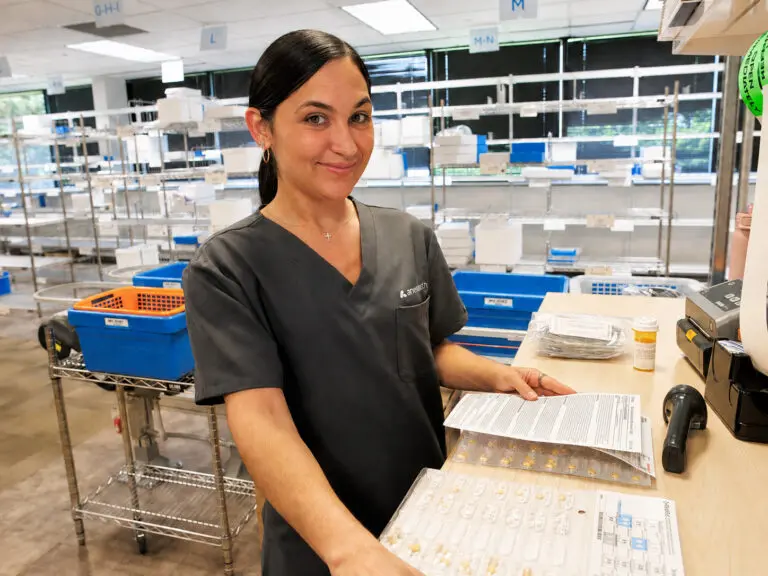
Pharmacist insight can help turn complex medication questions into more actionable care decisions.
What Effective Pharmacist Integration in PACE Looks Like
Pharmacist integration does not require the pharmacist to attend every meeting or review every participant with the same intensity.
It requires a clear model for bringing pharmacy expertise into the moments where it adds the most value:
- High-risk participant reviews
- Falls committee discussions
- Transitions of care reconciliation
- Deprescribing decisions
- Complex or unexpected treatment response
Effective integration also means the care team knows where to turn when an urgent medication question arises, including after-hours or weekend concerns. That accessibility helps pharmacy function as an extension of the IDT rather than as a resource contacted only after a problem has escalated.
The most successful PACE pharmacy partnerships do not simply add another service. They make medication management safer, communication easier, and care planning more connected.
Frequently Asked Questions About Pharmacists and the PACE Interdisciplinary Team
What is the pharmacist’s role on a PACE interdisciplinary team?
Beyond dispensing and medication review, the pharmacist contributes medication expertise to the moments where care decisions are made: high-risk participant reviews, falls committee discussions, transitions of care reconciliation, and deprescribing conversations. The role is to help the interdisciplinary team identify risk earlier and weigh medication-related concerns alongside function, goals of care, and caregiver input.
How does a pharmacist support falls prevention in PACE?
A pharmacist reviews the participant’s complete regimen for cumulative sedative and anticholinergic burden, orthostasis, hypoglycemia risk, duplicate therapies, and recent medication changes. The value is not only flagging a medication associated with falls, but helping the falls committee determine whether a practical intervention exists and how it fits the broader care plan.
How often should a pharmacist participate in IDT meetings?
Effective integration does not require attendance at every meeting. It requires a clear model for when pharmacy expertise is brought in, plus a reliable path for urgent medication questions including after-hours and weekends. Consistency and accessibility matter more than frequency.
Continue the Conversation With AnewHealth
Connect with our PACE team at the 2026 National PACE Association Annual Conference, October 11 to 14 in Denver, Colorado, and join us for the next AnewHealth Impact & Innovation Summit, November 10 to 12 in Huntington Beach, California, as we continue exploring how deeper pharmacy integration can strengthen the interdisciplinary team and support better participant outcomes.
Related reading: 3 Priorities Shaping the Future of PACE Pharmacy Partnership · From Polypharmacy to Precision: Why Pharmacogenomics Matters Now in PACE